The learning gallery
Three ways a machine can make a choice
First guess what will happen. Then try a change and see whether your explanation still holds. Each game works in a different way.
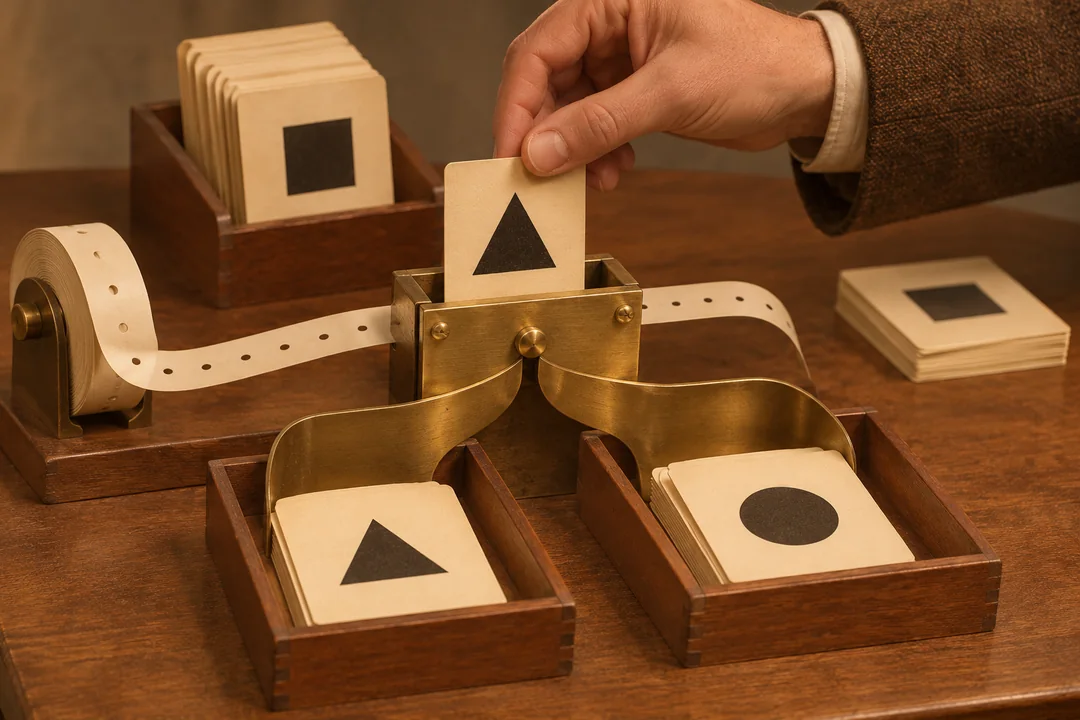
Rules and symbols
Where will the square go?
The sorter has two instructions: a triangle goes left and a circle goes right. What happens when it sees a square?
Send a shape to the sorter.
The sorter is ready.
Predict a tray, then check what happens
The triangle goes left and the circle goes right. The square stays unassigned because neither instruction covers it. The sorter can only follow the rules it received.
This sorter follows instructions a person wrote. Try the idea elsewhere. A parcel sorter meets a shape nobody planned for. Would you let it guess, or set the parcel aside for someone to inspect? Which mistake would cost more?
Visit the rule room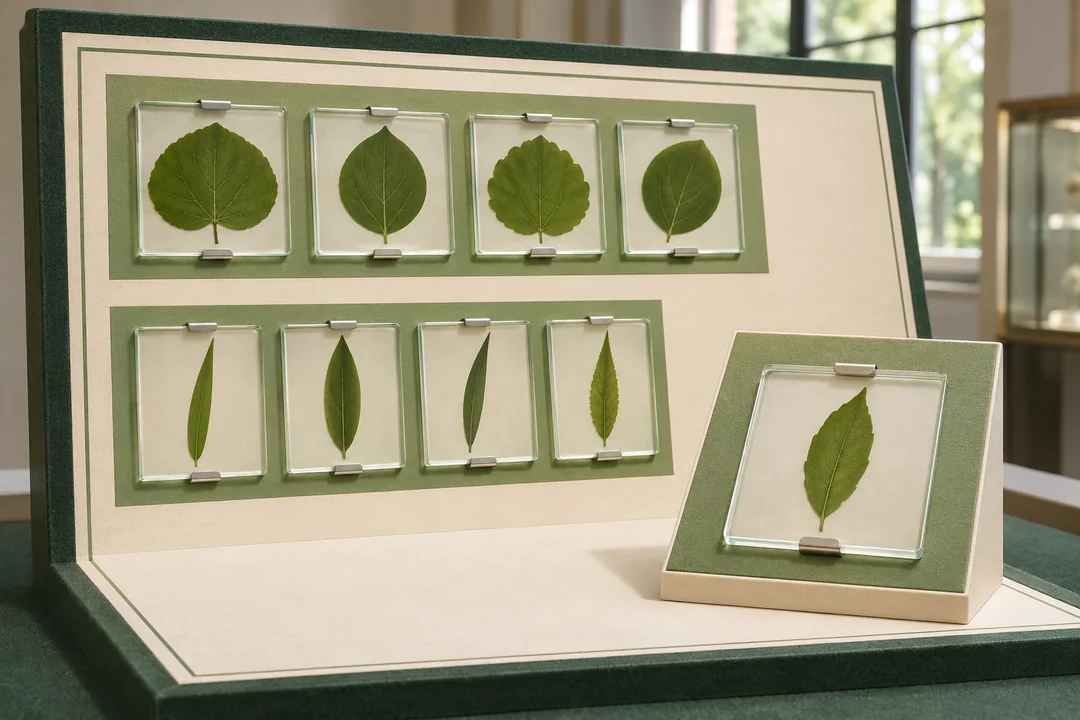
Learning from examples
Which leaf looks closest?
This small classifier uses one measurement: leaf width. Its labelled examples are 2 and 4 units, narrow, and 7 and 9 units, broad. It gives a new leaf the label of the nearest example. Predict what it will say at width 5.
Choose a label, then select Test this leaf. You can change the width or examples before each test.
Predict the label at width 5, then check
Width 4 is the closest example, so the sorter chooses narrow. Add a broad example at width 5 and it chooses broad for that same leaf. The leaf stayed the same. Its nearest labelled example changed.
This toy sorter compares widths from made-up examples. Try the idea elsewhere. Someone trains a fruit sorter using only green apples. Which apples would you bring to its first test?
Compare your thinking
Bring red and yellow apples, and other green fruit. Try cases missing from the original examples to see what the sorter has really learnt.

Language and context
What does “bank” mean here?
Keep the word and change its surroundings. Read each sentence and decide which word provides the strongest clue.
The canoe drifted towards the bank.
Choose a meaning, then reveal the clue.
Read both sentences. “The canoe drifted towards the bank.” “She took her paycheque to the bank.”
Predict the two meanings, then reveal the clues
The canoe points to a riverbank. The paycheque suggests a financial institution. The word “bank” stayed the same, while the nearby words changed its likely meaning.
In this game an editor picked each clue. A real language model learns which parts of its input to combine. Try the idea elsewhere. A friend writes “Meet me at the bank.” What would you ask before sending directions?
Compare your thinking
Ask which bank or for a landmark. Without the canoe or paycheque, either meaning could fit.
Would you trust the answer?
Use the same habit on an AI-written reply. One sentence could send a visitor to the wrong event.
Try “Would you send this?”Take the question into the news
When a lab announces a new model, ask what it takes in, what it produces and where a person can actually use it.
Try a Gemini announcement. Which product does the evidence cover?Take apart the demo
Can a spreadsheet paint with light?
Watch the original film, then move a light across a grid and inspect a cell.